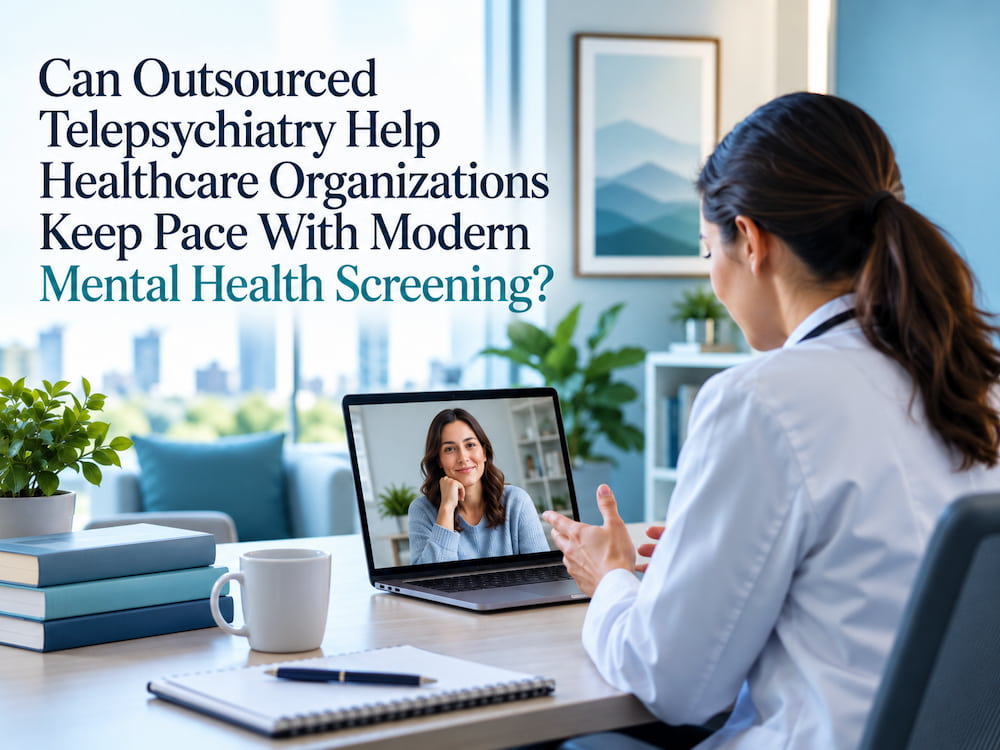
Mental healthcare is changing quickly, but many hospitals, clinics, schools, correctional facilities, and community health organizations do not have enough psychiatric professionals available to turn new screening approaches into timely clinical care. Outsourced telepsychiatry offers one way to close that gap. FasPsych, for example, connects healthcare organizations with psychiatrists, psychiatric nurse practitioners, and other behavioral health professionals through secure, real-time video, with scheduled and on-demand services designed for settings ranging from hospitals and outpatient clinics to schools and correctional facilities. Its nationwide provider network includes clinicians licensed across the United States, allowing organizations to add psychiatric capacity without relying entirely on local hiring. FasPsych also follows developments in mental health assessment, including research into emerging psychiatric screening tools such as the mwTool-13. Importantly, FasPsych states that it does not sell or endorse the mwTool-13; rather, its role is to provide the qualified clinicians who can perform the assessment, diagnostic, prescribing, and disposition work that a positive screen may trigger.
That distinction gets to the heart of modern behavioral healthcare.
A screening questionnaire can identify someone who may need help. It cannot, by itself, determine a complete diagnosis, weigh competing explanations for symptoms, select an appropriate medication, or decide whether a patient requires emergency intervention.
Healthcare organizations therefore need to think about screening and psychiatric access as parts of the same workflow.
Mental Health Screening Is Becoming More Sophisticated
For years, healthcare organizations have relied on established tools that focus on particular problems. Depression, anxiety, alcohol misuse, suicide risk, and other behavioral health concerns may each have their own screening questionnaire.
These instruments remain valuable. The challenge is operational.
A busy emergency department, primary care practice, school health program, or correctional intake unit may need to identify several types of mental health concerns at once. Running multiple questionnaires can consume staff time and still leave the organization with a larger problem: what happens after a patient screens positive?
The recent U.S. study of the mwTool-13 illustrates how researchers are trying to address the first part of that problem.
The mwTool-13 is a 13-item, two-stage mental health screening instrument. The first three questions are intended to identify whether a patient may have any mental disorder. If that initial screen is positive, ten additional questions help categorize the signal into areas such as common mental disorders, severe mental disorders, substance use disorders, or suicide risk.
Its first U.S. assessment involved 269 patients receiving psychiatric emergency care at a New York City hospital. According to the published results summarized by FasPsych, the initial three-question stage showed 95% sensitivity for identifying any mental disorder. The full tool showed higher sensitivity for common mental disorders and suicide risk than for severe mental disorders.
Those numbers need context.
The study took place in a psychiatric emergency setting with a relatively high prevalence of mental illness, and the researchers compared the screening results with assessments by attending psychiatrists. Performance in a general primary care practice, school, jail intake unit, or ordinary emergency department could be different. FasPsych’s own analysis explicitly warns against treating the instrument as a diagnosis or assuming that results from one clinical environment automatically apply to another.
That is exactly why clinician access remains essential.
A Screening Tool Is a Door, Not the Entire Visit
One of the most useful ways to think about psychiatric screening is as a routing mechanism.
The questionnaire asks, in effect: Does this person appear to need a closer look?
The psychiatrist or other appropriately qualified clinician answers the more difficult questions that follow.
That principle is not limited to newer tools. The National Institute of Mental Health’s Ask Suicide-Screening Questions Toolkit uses a similar stepped approach for suicide risk. A positive screen should be followed by a brief suicide safety assessment by an appropriately trained clinician to determine whether a more comprehensive mental health evaluation is necessary.
In practice, this means a healthcare organization gains little by improving its ability to identify behavioral health risk if patients then wait hours, days, or weeks for someone qualified to evaluate it.
That is where outsourced telepsychiatry can become part of the medical service model.
Why Healthcare Organizations Outsource Telepsychiatry
Recruiting psychiatrists has historically been difficult in many parts of the United States. The problem becomes more pronounced for organizations that need evening coverage, weekend evaluations, child and adolescent expertise, crisis services, or clinicians licensed for a particular jurisdiction.
A hospital may have enough volume to need psychiatric support around the clock but not enough predictable volume to justify maintaining a large in-house team.
A rural clinic may need only a few psychiatry sessions each week.
A correctional facility may experience sudden changes in demand depending on intake volume.
A school-based health program may need access to child and adolescent expertise but lack enough local specialists.
Outsourced telepsychiatry changes the staffing model. Instead of requiring every psychiatrist to be physically present at the facility, a qualified provider can conduct an evaluation through secure two-way video.
The U.S. Department of Health and Human Services notes in its guidance on telehealth for behavioral health care that telebehavioral health can expand access, improve access to specialists, reduce travel burdens, increase convenience, and help address provider shortages.
This does not mean every behavioral health encounter belongs on video. Rather, telepsychiatry gives organizations another way to build clinical capacity when an appropriate professional cannot be physically present.
How FasPsych Fits Into an Outsourced Model
FasPsych operates as a telepsychiatry staffing and service company rather than simply providing consumer video appointments.
The distinction matters for healthcare organizations.
Its providers work with partner facilities that include psychiatric hospitals, emergency departments, outpatient clinics, community mental health centers, primary care organizations, schools, correctional facilities, residential programs, and other healthcare environments. FasPsych offers scheduled coverage as well as on-demand services for needs such as psychiatric assessments, crisis intervention, and medication management.
Its network includes psychiatrists, child and adolescent psychiatrists, psychiatric nurse practitioners, psychologists, social workers, counselors, and other licensed behavioral health professionals. Provider licensure must match the state where the patient is physically located, an important operational requirement in telehealth.
FasPsych also states that its network can provide nationwide coverage, with providers licensed across all 50 states and Washington, D.C.
For a healthcare organization, the potential value is flexibility. Psychiatric coverage can be built around clinical demand rather than around the assumption that every professional must be recruited into a traditional full-time, onsite role.
Keeping Clinical Workflows Current
The mental health field does not stand still.
Research changes. Screening instruments are validated in new populations. New evidence emerges about treatment. Telehealth rules evolve. Healthcare organizations also learn more about which workflows create unnecessary delays between screening and intervention.
Working with a specialized telepsychiatry organization can give a facility access to clinicians who work in behavioral health every day and are expected to keep up with changes in psychiatric practice.
That does not mean an outside provider should automatically introduce every newly published screening tool.
The mwTool-13 is a good example of why careful evaluation matters.
Its recent U.S. results are interesting because the tool attempts broad-spectrum screening in a relatively short format. But its first U.S. study involved only one psychiatric emergency environment, and its performance varied depending on the category being screened. FasPsych specifically notes that severe-mental-disorder sensitivity was lower than for common mental disorders or suicide risk and cautions against relying on the tool as a stand-alone psychosis screen.
A responsible implementation question is therefore not:
“Is this the newest tool?”
It is:
“Is there sufficient evidence for this tool in our patient population, and what happens when the result is positive?”
That second question is where clinical staffing and workflow design become inseparable.
Screening Without Follow-Up Creates Another Queue
Imagine an emergency department introduces a broad mental health screener.
The tool successfully identifies more patients who may require psychiatric assessment.
At first glance, that looks like an improvement.
But if the hospital has only one psychiatrist available for a limited number of hours each day, the result can simply be a longer queue of identified patients waiting for an assessment.
The screening program has improved detection without improving care capacity.
A better model maps the entire pathway before the new tool is introduced:
screening → positive result → clinical assessment → diagnosis and risk formulation → treatment or disposition
Telepsychiatry can supply the clinician at the point where the questionnaire ends.
HHS notes that telepsychiatry can include psychiatric evaluation, diagnosis, medication prescribing and management, and other behavioral health services.
For medical organizations, this makes telepsychiatry not merely a video technology but a staffing strategy.
Hospitals and Emergency Departments
Emergency departments provide one of the clearest use cases.
Psychiatric patients may arrive at any hour. Some need medication evaluation. Others require assessment of suicide risk, psychosis, substance use, agitation, or the appropriate level of care.
Maintaining immediate onsite psychiatric availability can be difficult, especially for smaller hospitals.
An on-demand telepsychiatry model can allow emergency clinicians to request psychiatric support when a case requires specialized evaluation.
Screening tools can help identify risk and organize the initial assessment, but they should not be mistaken for the psychiatric consultation itself.
The clinical professional still has to integrate the screen with history, mental status examination, medications, medical conditions, collateral information, and current circumstances.
Correctional Facilities
Correctional healthcare presents different challenges.
Jails and prisons may receive people with previously diagnosed psychiatric disorders, substance use problems, interrupted medication regimens, or symptoms that have never been formally evaluated.
Access to local psychiatrists can be limited, while transporting patients outside secure facilities introduces additional logistical requirements.
Telepsychiatry allows qualified providers to assess patients without requiring routine external transport.
A facility may use screening during intake to flag potential behavioral health needs and then route appropriate patients to a remote psychiatric professional.
Again, the critical issue is the connection between detection and evaluation.
Schools and Community Settings
Schools, universities, community mental health centers, and primary care practices can face the opposite challenge: symptoms may emerge long before a patient reaches a psychiatric hospital.
Telepsychiatry can help extend specialist access into environments where patients already receive other services.
HHS specifically identifies the integration of behavioral health with primary care through telehealth as a way to increase access and improve coordination.
For schools, the provider mix and workflow must also reflect age, consent, guardianship, local policy, and the need for child and adolescent expertise.
A screening score alone should never become a label attached to a student or patient. It is information that can help determine whether further evaluation is appropriate.
Technology Matters, but Staffing Matters More
Telepsychiatry is often discussed as though the technology itself is the innovation.
Video quality, encryption, connectivity, EHR integration, and privacy are certainly important. FasPsych says its telepsychiatry services use secure real-time audio/video systems designed to comply with HIPAA requirements.
But a video platform without an available professional does not solve a psychiatric staffing shortage.
The more important questions are operational:
Who answers when the organization needs a psychiatric evaluation?
How quickly can the patient be seen?
Is the clinician licensed in the patient’s state?
Does the provider have experience with the relevant population?
Can the psychiatrist document within the organization’s workflow?
Who receives a positive screening result?
What happens during an emergency?
Those questions determine whether telepsychiatry becomes part of the care system or remains just another piece of software.
What Healthcare Leaders Should Evaluate Before Outsourcing
Healthcare organizations considering an outsourced telepsychiatry relationship should look beyond provider numbers.
Clinical credentials and state licensure are fundamental, but so are credentialing processes, malpractice coverage, scheduling reliability, technology security, emergency protocols, EHR documentation, medication-management workflows, and coverage during evenings or weekends.
Organizations should also discuss how existing screening tools will fit into the psychiatric workflow.
If the facility uses PHQ-9, GAD-7, ASQ, C-SSRS, or is evaluating a newer broad-spectrum instrument such as mwTool-13, the telepsychiatry team should understand when and how those results are presented to the clinician.
Screening should make the clinical pathway clearer—not produce another disconnected data point.
The Future Is Likely to Be More Integrated
The most important development in telepsychiatry may not be a particular screening questionnaire or videoconferencing platform.
It is the movement toward connecting them.
A patient enters a healthcare environment. A brief validated screening process identifies a possible concern. The result enters an organized workflow. A psychiatrist or psychiatric nurse practitioner becomes available through telehealth. The clinician performs the assessment, determines the appropriate next step, documents the encounter, and coordinates with the local care team.
That is much more useful than simply digitizing an existing waiting list.
As new mental health screening methods emerge, organizations will need clinicians who understand both what these instruments can do and where their limitations begin.
The mwTool-13 illustrates that principle well. Its early U.S. findings show why shorter, broad-spectrum screening approaches are attracting attention, but its own evidence also demonstrates why screening cannot replace clinical judgment.
Conclusion
Healthcare organizations do not need new mental health tools simply because they are new. They need better systems for recognizing behavioral health needs and connecting patients with qualified professionals who can respond.
Outsourced telepsychiatry can help make that connection possible.
For hospitals, clinics, schools, correctional facilities, community programs, and other healthcare organizations, services such as those provided by FasPsych can add psychiatric capacity through scheduled or on-demand video-based care without requiring every specialist to be physically onsite.
That flexibility becomes increasingly important as screening improves.
Modern psychiatric tools can help identify patients who may need attention more efficiently, but the screen should always lead somewhere. A positive result still requires interpretation, assessment, clinical judgment, and—when appropriate—treatment.
The strongest telepsychiatry strategy therefore does not begin with video technology or a questionnaire. It begins with a practical question: when the system identifies a patient who needs psychiatric care, is a qualified professional actually available to take the next step?
Check out the rest of our articles!
Read Also
- Can Outsourced Telepsychiatry Help Healthcare Organizations Keep Pace With Modern Mental Health Screening?
 Mental healthcare is changing quickly, but many hospitals, clinics, schools, correctional facilities, and community health organizations do not have enough psychiatric professionals available to turn new screening approaches into timely clinical care. Outsourced telepsychiatry offers one way to close that gap. FasPsych, for example, connects healthcare organizations with psychiatrists, psychiatric nurse practitioners, and other behavioral… Read more: Can Outsourced Telepsychiatry Help Healthcare Organizations Keep Pace With Modern Mental Health Screening?
 - Five operational checks for choking readiness in healthcare facilitiesA facility can have a choking poster on every wall and still be unprepared. Preparedness shows up when someone can recognize the emergency, call the right response, bring the right people and supplies to the room, and hand over clear information without losing time. That test belongs in operations as well as clinical education. The… Read more: Five operational checks for choking readiness in healthcare facilities
- Understanding the Demand for Correctional Healthcare ProfessionalsHave you ever wondered who cares for people when they get sick inside a prison? Many people do not realize that jails and prisons need skilled medical teams every single day. By reading this guide, you will learn why these important jobs are growing fast and how you can join this rewarding career field. Caring… Read more: Understanding the Demand for Correctional Healthcare Professionals
- Patient Engagement and Pharmaceutical Support Services: Building a Better Patient JourneyPatients rarely experience healthcare as a simple, linear process. They may need to understand a diagnosis, determine whether they qualify for a clinical trial, gather medical records, navigate insurance requirements, arrange transportation, learn how to use a medication, and stay engaged with treatment for months or years. Serva Health is one example of a specialist… Read more: Patient Engagement and Pharmaceutical Support Services: Building a Better Patient Journey
- Industrial Container Recycling and Waste Management Services: A Practical Guide for BusinessesIndustrial container recycling is an essential part of responsible waste management for manufacturers, warehouses, laboratories, automotive businesses, chemical companies, food processors, and other organizations that regularly handle bulk materials. A strong example is Kelly Drums, a Mid-Atlantic provider of reconditioned drums and comprehensive container management solutions. The company specializes in the pickup, recycling, reconditioning, and… Read more: Industrial Container Recycling and Waste Management Services: A Practical Guide for Businesses
- BCBA & RBT Salary by State 2026 | Behavior Analyst PayPay in applied behavior analysis is harder to pin down than in almost any other healthcare field. Two professionals with the same certification can earn $40,000 apart for no reason other than the state line between them. So before you accept an offer, ask for a raise, or relocate for a bigger paycheck, it helps… Read more: BCBA & RBT Salary by State 2026 | Behavior Analyst Pay
- Top Strategies for Integrating Technology into Healthcare TrainingHave you ever wondered how healthcare workers learn new skills as medicine keeps changing? Today, new tools make learning easier, faster, and more flexible for many healthcare workers. Technology in healthcare training helps people learn from almost anywhere and practice skills in safe places. These tools can make learning more fun and easier to remember.… Read more: Top Strategies for Integrating Technology into Healthcare Training
- Why the Future of Healthcare Administration is Cloud-NativeThe operational demands placed on modern healthcare administrators have officially outpaced the capabilities of traditional IT infrastructure. While clinical medicine continues to advance at breakneck speed, the back-office systems required to support it often remain painfully stagnant. Today’s insurers, Third-Party Administrators (TPAs), and provider networks are forced to navigate an avalanche of daily claims, aggressive… Read more: Why the Future of Healthcare Administration is Cloud-Native